

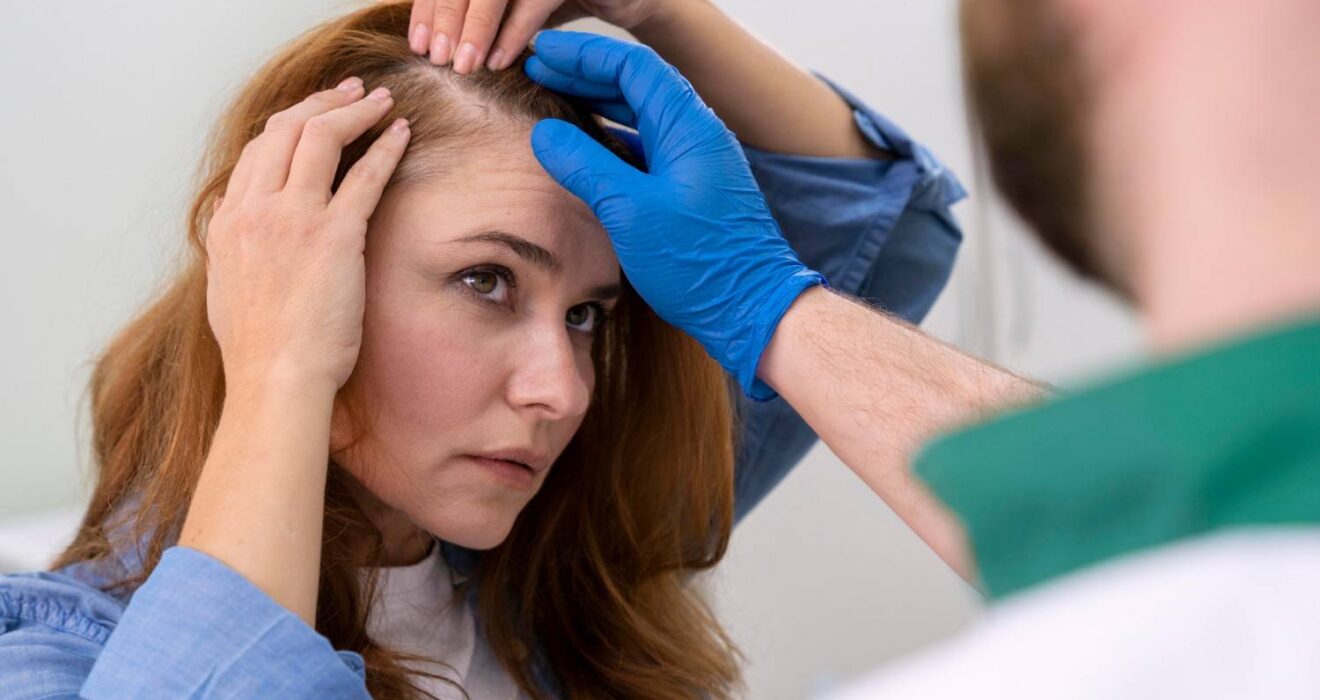
What Treatments Are Commonly Recommended for Different Types of Hair Thinning?
Hair thinning can be frustrating, especially when you are unsure why it is happening. One person may notice a slowly receding hairline, while another may suddenly find more hair on the comb or pillow. Some people experience thinning across the scalp, whereas others develop small areas with noticeably less hair.
These differences matter. Hair Thinning Treatment in Noida should not be based only on how much hair is being lost. The pattern, duration, scalp condition, medical history, and possible trigger all help determine what approach may be appropriate. Pattern Pharma focuses on understanding these differences before considering treatment options.
Why Can Hair Become Thinner?
Hair does not remain in the same state throughout its life. Individual strands grow, rest, and eventually shed. Problems can arise when this cycle is disturbed or when new strands become progressively finer.
Several factors can be involved, including:
- Family tendency towards pattern hair loss
- Changes in hormones
- Recent illness or physical stress
- Poor nutritional intake or confirmed deficiencies
- Certain medicines
- Scalp disorders
- Tight hairstyles or repeated hair damage
- Significant lifestyle changes
The first step is therefore to look beyond the visible hair fall and consider what might be happening underneath it.
Treatment Options for Pattern Hair Loss
Some people gradually lose density around the hairline, crown, or top of the scalp. In others, the central parting becomes wider over time. This type of progressive thinning can be associated with hereditary pattern hair loss.
Treatment may include clinically appropriate topical or oral medicines. The choice depends on factors such as the individual’s age, sex, health history, and extent of hair loss.
Medication is not the only consideration in every case. If substantial thinning has already occurred, a doctor may also discuss whether a hair restoration procedure could be appropriate.
The important point is to avoid selecting a treatment simply because it is popular. A treatment suitable for one pattern of hair loss may not be suitable for another.
What About Sudden or Excessive Hair Shedding?
Not all hair fall means permanent loss. Sometimes, a person experiences a noticeable increase in shedding for a period of time. This can happen after certain illnesses, major stress, substantial dietary changes, or other physical events.
Here, the story behind the shedding becomes particularly useful.
For example, a doctor may ask when the extra hair fall began and whether anything changed several weeks or months beforehand. Information about recent health problems, diet, medications, stress, and lifestyle can help in understanding the situation.
Instead of immediately trying several hair-growth products, it can be more useful to identify the possible trigger first.
When Nutritional Factors Are Involved
The body needs adequate nutrition to support normal hair production. In some cases, an established nutritional deficiency may be associated with increased shedding or changes in hair quality.
That does not mean everyone with hair fall needs supplements.
Unnecessary supplementation may not address the actual reason for thinning. If a nutritional problem is suspected, the need for dietary changes or supplementation can be considered based on the individual’s circumstances and appropriate evaluation.
Pattern Pharma takes this distinction into account when discussing Hair Thinning Treatment in Noida, because treating an assumed deficiency without establishing that it exists may not solve the underlying problem.
Hormonal Factors and Hair Loss
Hair can also respond to changes in the body’s hormonal environment. Some people notice alterations in hair density during periods of hormonal fluctuation or alongside conditions that affect hormone levels.
The treatment approach in such situations depends on what is causing the hormonal change. Addressing the underlying issue may be an important part of managing the associated hair concerns.
This is one reason why a complete history can be more helpful than looking at the scalp alone.
When the Scalp Needs Attention
Sometimes the scalp itself gives clues about the problem. Persistent flaking, irritation, itching, redness, or other changes may occur alongside hair shedding.
A scalp-related problem may need its own treatment. Depending on the cause, a healthcare professional may recommend specific medicated products or another suitable approach.
It is also worth reviewing everyday hair habits. Frequent heat styling, aggressive brushing, repeated chemical processing, or very tight hairstyles can place unnecessary stress on the hair.
Gentler hair care can help reduce avoidable damage, although it cannot replace treatment for an underlying medical cause.
Can Hair Restoration Procedures Help?
For selected individuals, procedures may form part of a hair restoration plan. Whether one is appropriate depends on the type and extent of hair loss and the person’s individual circumstances.
A consultation can help determine whether a procedure makes sense or whether other options should be considered first.
It is important to have realistic expectations. Hair restoration is not automatically the right answer for every person experiencing thinning.
Why One Treatment Does Not Suit Everyone
Imagine two people with similar-looking hair loss. One has gradually developed thinning over several years, while the other started shedding heavily after a recent health event. Their treatment needs may be completely different.
This is why Hair Thinning Treatment in Noida should begin with assessment rather than a product recommendation.
A professional may consider the following:
- Where the thinning has appeared
- How quickly it developed
- Whether close relatives have similar hair loss
- Changes in diet or weight
- Recent illness or major stress
- Current medicines
- Scalp symptoms
- Previous attempts to manage the problem
These details can help narrow down the possible explanation and guide the next step.
What Can You Do While Seeking Treatment?
Small changes in hair care can help protect existing strands. Avoid excessively tight hairstyles, handle wet hair gently, and limit unnecessary heat or chemical processing.
A varied diet and regular meals are also important for overall nutritional health. However, lifestyle measures should be viewed as supportive rather than as a guaranteed solution for every type of hair loss.
If shedding continues despite these measures, professional evaluation is worth considering.
When Should You Seek Professional Advice?
Consider getting your hair examined if thinning continues, becomes increasingly noticeable, develops in patches, or occurs with significant scalp changes. Sudden or unexplained hair loss also deserves attention.
An early discussion can help distinguish between temporary shedding and progressive hair loss and may prevent you from spending time and money on unsuitable products.
For people looking for Hair Thinning Treatment in Noida, the goal should be to understand the reason for the change before choosing a treatment. Pattern Pharma can help patients explore the possible causes and discuss appropriate options based on their individual concerns.
Conclusion
Hair thinning can have very different causes, which is why treatment needs to be considered on an individual basis. Progressive pattern loss, temporary shedding, nutritional concerns, hormonal factors, and scalp problems may require different approaches.
There is no single solution that works for every type of hair thinning. A careful assessment can help identify the likely cause and determine which options are worth considering.
If you are noticing persistent changes in hair density or increased shedding, Hair Thinning Treatment in Noida can be explored with a professional after understanding your specific condition. Pattern Pharma believes that a clear understanding of the problem is an important starting point for making informed treatment decisions.
For fast information, contact us on +91-9910201115